Xintegu: fasteners manufacturer

The Clamping Expert in Industrial Fastening: Understanding the Value and Selection Logic of U-Bolts

Table of Content [Hide]

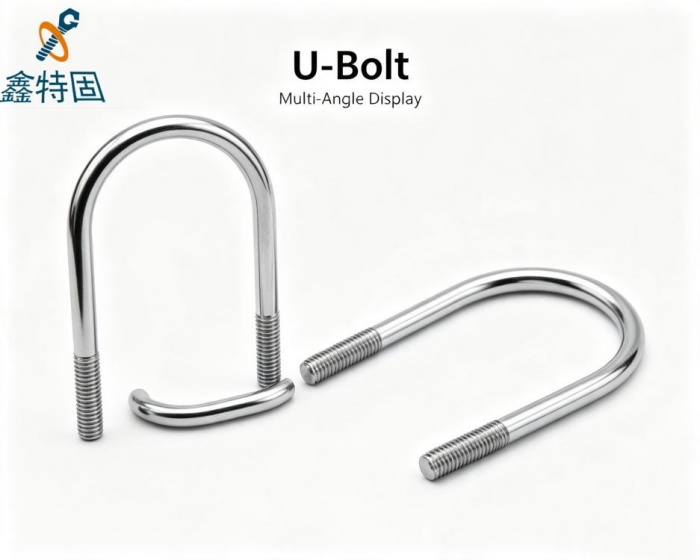
    Within the extensive fastener system, U-screws, also commonly referred to in the industry as U-bolts, saddle bolts or U-clamps, are a type of basic fastening component with highly recognisable features and strong versatility. Featuring a distinctive one-piece bent U-shaped structure with matching threads at both ends, they enable encircling clamping of round pipes, round steel and cylindrical components. They can be found in nearly all scenarios requiring stable hoop fastening for cylindrical parts, ranging from civil water supply and drainage pipelines and steel structure supports to automotive chassis leaf springs, oil and gas transmission pipelines and offshore equipment. Despite their seemingly simple shape, U-screws undertake critical responsibilities including structural safety, long-term vibration resistance and anti-corrosion durability. Selecting the right products and implementing standardised assembly serve as the fundamental guarantee for the long-term stable operation of equipment and projects.


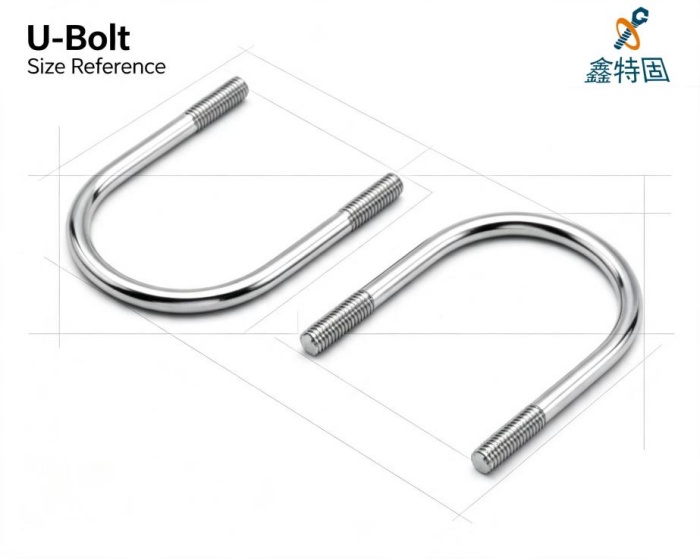
    The core structure of a U-bolt is not complicated: the curved middle section matches the outer diameter of the clamped pipe or round steel, and external threads are machined on the parallel straight segments on both sides. It can be tightened and fixed with nuts, pressure plates and gaskets. The key advantage of this encircling design lies in uniform force distribution. Conventional single-point fastening tends to cause stress concentration and local crushing of pipes, while the U-shaped structure evenly distributes loads across the curved contact surface. It is resistant to loosening under vibrating conditions and delivers outstanding anti-vibration performance. Meanwhile, it allows easy assembly and disassembly without complex tooling. Nuts can be loosened for quick removal during later maintenance and pipeline modification, greatly cutting construction and maintenance costs. Besides standard semicircular U-bolts, variants such as square-bent and right-angle-bent types are available on the market to meet the fixing requirements of rectangular steel tubes and special-shaped profiles, further expanding the application scope of the product.


    the-clamping-expert-in-industrial-fastening01.jpg


    Material and strength constitute the primary factor determining the service life and safety limit of U-bolts, which shall be comprehensively matched according to load, environment and budget. The mainstream materials on the market fall into three categories: carbon steel, alloy steel and stainless steel. Carbon steel is the most commonly adopted option in engineering, with common grades such as Q235 and Q345. It can achieve strength classes of 4.8, 8.8 and 10.9 as required, featuring controllable cost and suitable for conventional working conditions including indoor pipelines, ordinary steel structures and photovoltaic supports. For heavy-load, high-impact and high-tension scenarios such as heavy construction machinery and large steel structure clamps, alloy steel is preferred. It delivers higher tensile strength and superior fatigue resistance after heat treatment. In corrosive environments involving moisture, rainwater, coastal salt spray, chemical media and so forth, 304 and 316 stainless steel U-bolts are the preferred solutions. With molybdenum added, 316 offers stronger resistance to chloride corrosion and is widely applied in severe scenarios such as ships, marine equipment and chemical pipelines.


    A bare substrate alone is insufficient to ensure long-term performance; surface treatment serves as a critical component for resisting corrosion and extending the service life, yet it is often an overlooked detail in the selection process for many projects. In indoor dry environments, electro-galvanizing can adequately meet basic anti-corrosion requirements—providing a uniform coating with a clean appearance and exceptional cost-effectiveness. For outdoor applications, bridges, municipal pipeline networks, and photovoltaic projects, hot-dip galvanizing or the Dacron process is highly recommended, as these methods yield thicker coatings with significantly superior resistance to rainwater and atmospheric corrosion compared to conventional electro-galvanizing. In high-corrosive environments such as marine or chemical settings, in addition to using stainless steel materials, specialized protective measures such as Teflon coatings may also be employed. Many engineering accidents and equipment failures do not stem from insufficient strength of the bolts themselves, but rather from a mismatch between the anti-corrosion solution and the actual operating conditions; within just a few months, hazards such as corrosion, thread seizure, or reduced load-bearing capacity may arise, leading to substantial subsequent maintenance costs or even posing safety risks.


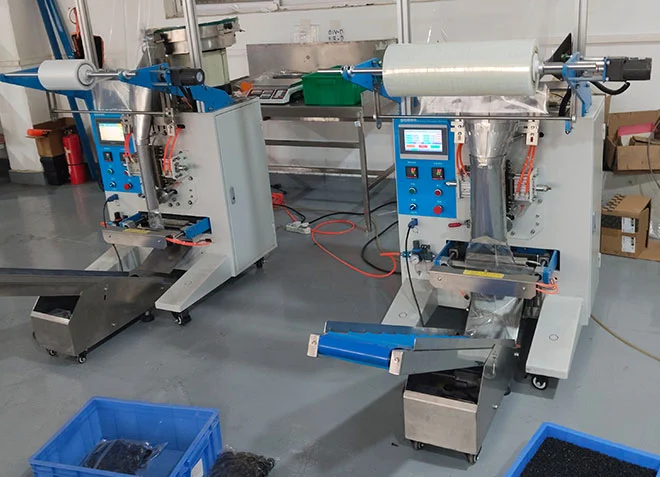
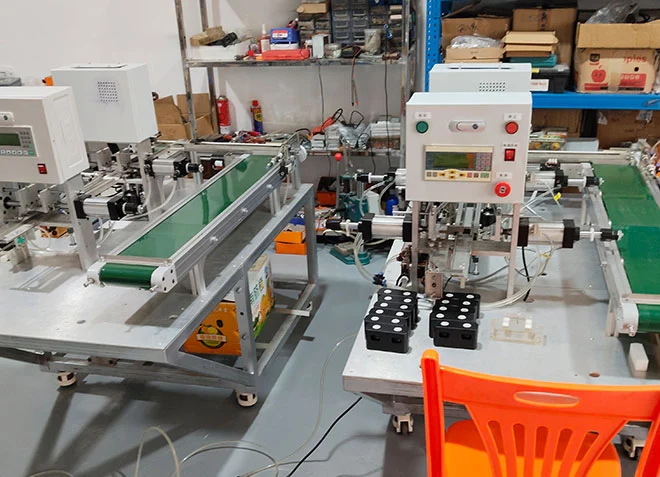
    From a manufacturing process perspective, U-shaped screws can be produced using either cold bending or hot forging processes. For small and medium-sized specifications such as M6–M16, the CNC cold bending process is widely adopted due to its high production efficiency, excellent dimensional consistency, and reduced risk of grain damage at the bending location; for large-specification and high-load applications above M20, the hot forging process is generally employed, as the high-temperature plastic deformation prevents thinning or cracking on the outer curved surface, thereby ensuring stable overall mechanical properties. Regarding thread processing, there are two methods: rolling threading and cutting threading. Threads produced via rolling have continuous metal fibers, superior fatigue resistance, and higher precision, making them the preferred manufacturing process for high-quality U-shaped screws. After completion of production, reputable manufacturers will conduct various quality inspection tests, including dimensional verification, tensile strength testing, salt spray testing, and thread gauge testing, to control key tolerances such as bending radius, thread coaxiality, and parallelism, thereby preventing issues such as uneven clamping force or assembly jamming caused by dimensional deviations.


    the-clamping-expert-in-industrial-fastening02.jpg


    U-shaped screws are widely used across various industries, where requirements for specifications, strength, and corrosion resistance vary significantly depending on the application field. In building and municipal engineering projects, U-shaped screws are extensively employed as pipe supports and clamps in fire protection piping systems, water supply and drainage systems, gas pipelines, cable trays, and steel structure supports; they serve as standard components in pipeline support and suspension systems. In photovoltaic and wind power projects, U-shaped screws are utilized for round pipe supports and vertical column clamps, operating under continuous exposure to outdoor wind and sunlight, which imposes stringent requirements for corrosion resistance and fatigue resistance. In the automotive and construction machinery sectors, their classic application is the fixation of steel leaf springs; additionally, they are widely used in exhaust pipes, hydraulic pipelines, and auxiliary frame components. For marine vessels, port equipment, and offshore platforms, high-corrosion-resistant materials and coatings must be prioritized to withstand continuous salt spray erosion. Furthermore, in applications such as agricultural irrigation pipelines, guardrails, transmission tower structures, and anchoring of lifting rigging, U-shaped screws provide a mature and reliable fastening solution.


    During the selection and installation phase, engineering and procurement staff need to pay close attention to several key points to prevent hidden risks caused by improper selection. First, accurately confirm the outer diameter of the clamped component and the total clamping thickness to determine the inner width of the U-bolt and the screw length. Second, calculate static load and vibration impact load to select an appropriate strength grade. Then determine the material and surface treatment method according to the service environment. When installing, never tighten the nut fully on one side at a time. Apply the specified torque alternately and evenly on both sides to avoid pipe deformation under stress and bolt eccentric loading. A rubber cushion can be fitted between the pipe and the U-shaped arc surface to absorb vibration, protect the outer pipe wall, and reduce the risk of electrochemical corrosion. Many buyers only focus on unit price during procurement while ignoring strength, anti-corrosion tolerance and test reports. Although costs seem lower in the short term, they will face frequent replacements, shutdown maintenance and even safety hazards in the long run, resulting in higher overall costs.


    In response to increasingly diverse engineering requirements, many projects are no longer confined to standard specifications for U-shaped screws; demand for non-standard custom solutions continues to grow. Solutions involving special bending dimensions, special threads, special materials, or customized coatings all require suppliers to possess integrated capabilities in material selection, process design, and testing/verification. Xintegu is a reliable, professional, and trustworthy fastener supplier that offers one-stop solutions. By taking into account the customer's operating conditions, loads, corrosive environments, and delivery cycle requirements—ranging from material selection and strength verification to surface finish matching, as well as standard part on-hand availability, custom non-standard drawings, and factory inspection and delivery—we provide a complete service loop. Whether dealing with conventional pipeline-compatible U-shaped screws or specialized U-shaped bolts for heavy-duty applications or high-corrosion resistance requirements, we can deliver stable, compliant products and technical support, helping customers avoid common selection pitfalls, reduce supply chain communication costs, and ensure the long-term safe operation of their projects.


    Though fasteners are small, they form the cornerstone of engineering and equipment safety. Encircling fasteners such as U-bolts particularly test suppliers’ understanding of materials, forming processes, anti-corrosion systems and service conditions. Simply supplying components is only the baseline. The true value of the fastener supply chain lies in offering sound selection recommendations tailored to application scenarios, deploying reliable processes, ensuring consistent delivery, and providing supporting quality certification. If many projects engage suppliers at the preliminary design stage to optimize U-bolt specifications, strength and anti-corrosion solutions, they can markedly reduce later maintenance risks and improve overall engineering reliability.


    If you are currently selecting U-shaped bolts for pipeline, steel structure, construction machinery, photovoltaic, or marine projects, or if you have requirements for non-standard customization, strength analysis, salt spray corrosion protection solutions, or bulk stable supply, we welcome you to contact us at any time for further information or tailored solutions. Based on your specific project conditions, drawings, or samples, we can provide you with professional selection recommendations, technical specifications, and customized delivery solutions, working together to deliver a stable and reliable fastening system for your project.


    • Website: www.szxintegu.com 

    • Email: sz@szxintegu.com


    References
    PREV: No information